
Genesis of a Visual Metamorphosis
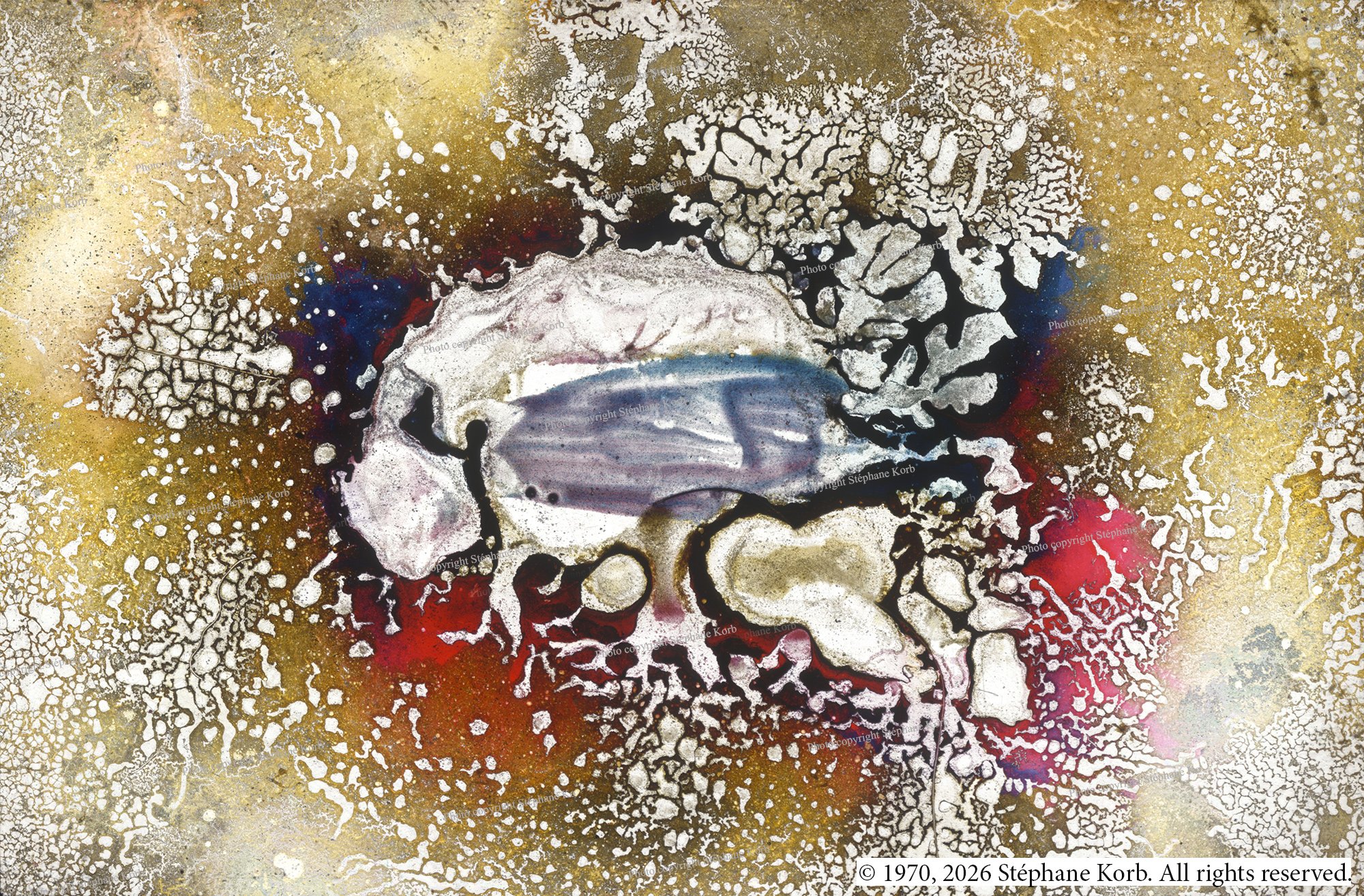
Long before turning to documentary photography and photojournalism, my visual exploration was built around an experimental alchemy: the creation of living, organic, and ephemeral forms trapped between two glass plates.
My approach relied on the interplay of liquid and pigmented substances with varying densities. Exposed to the beam of light that revealed a moving image to me, and to the heat generated by the projector, this fluid microcosm evaporated, contracted, and crystallized. The image shifted, and these tensions generated a visual in constant mutation.
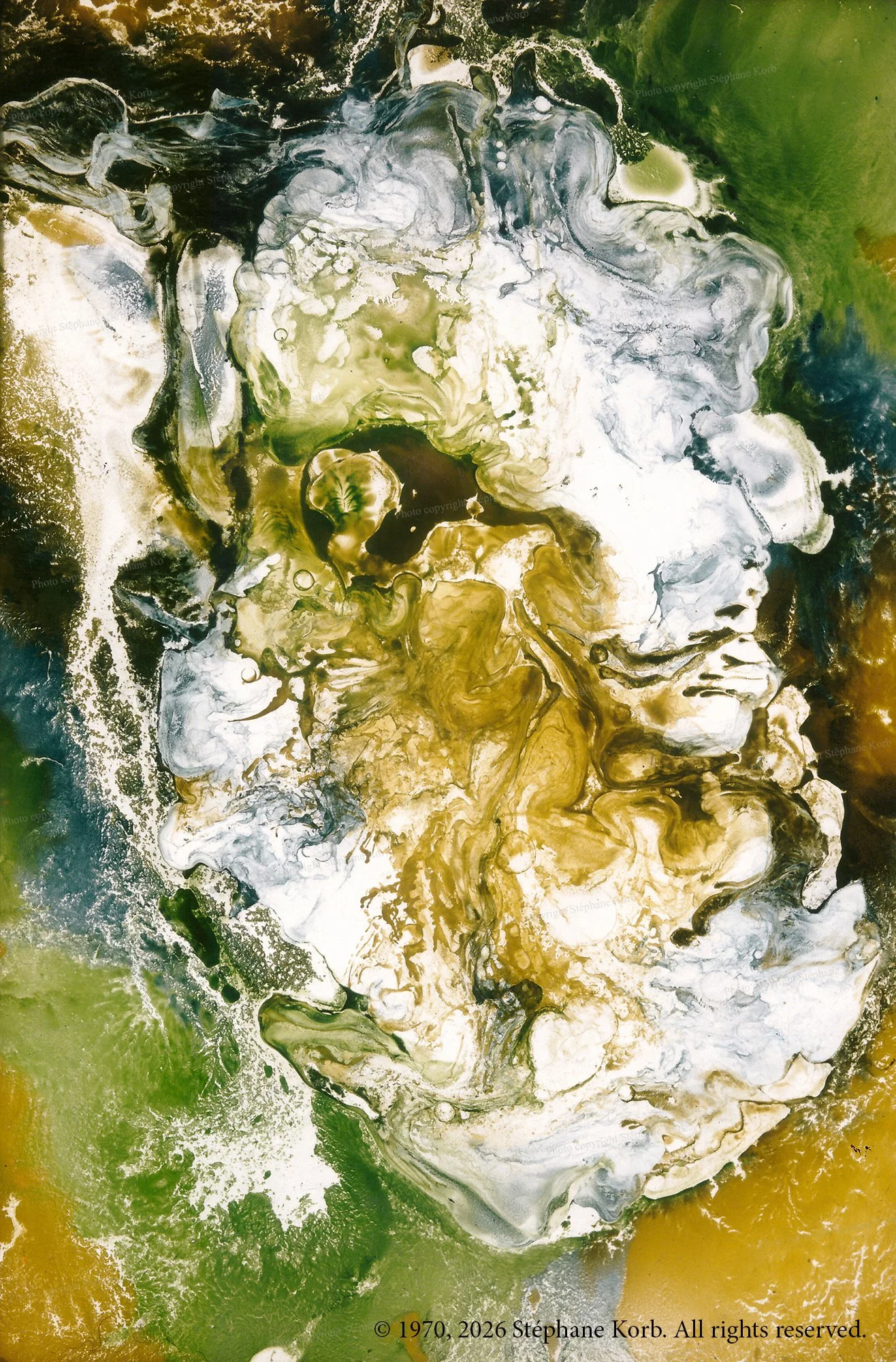
My artistic process consisted of intervening at the exact moment I felt the material revealed an appealing visual structure. By removing the lens cover at the right moment, I froze this dynamic once and for all, transforming a temporary physical reaction into a fixed, lasting composition. It was a matter of a double selection process: on one hand, I produced extensively; on the other, I discarded heavily, keeping only what sparked an emotional response within me.
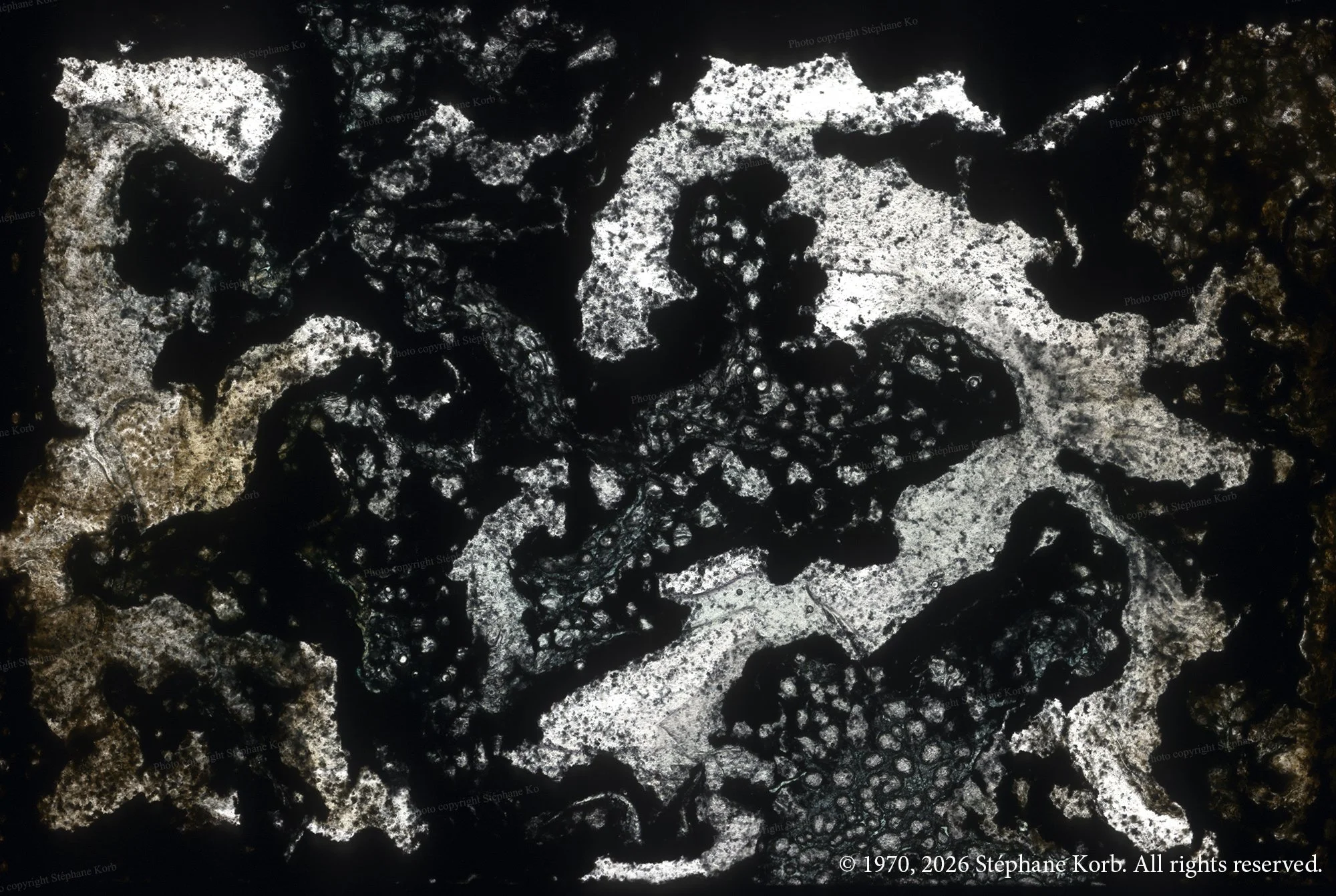
These glass matrices, designed to be traversed by light, along with my selection process, formed the very foundation of my work. I didn't know what to call them, but every now and then someone would say to me, "Show me your abstractions." That label stuck for a while, until I named the process fluidography; I was practicing fluidography before diving into photography.
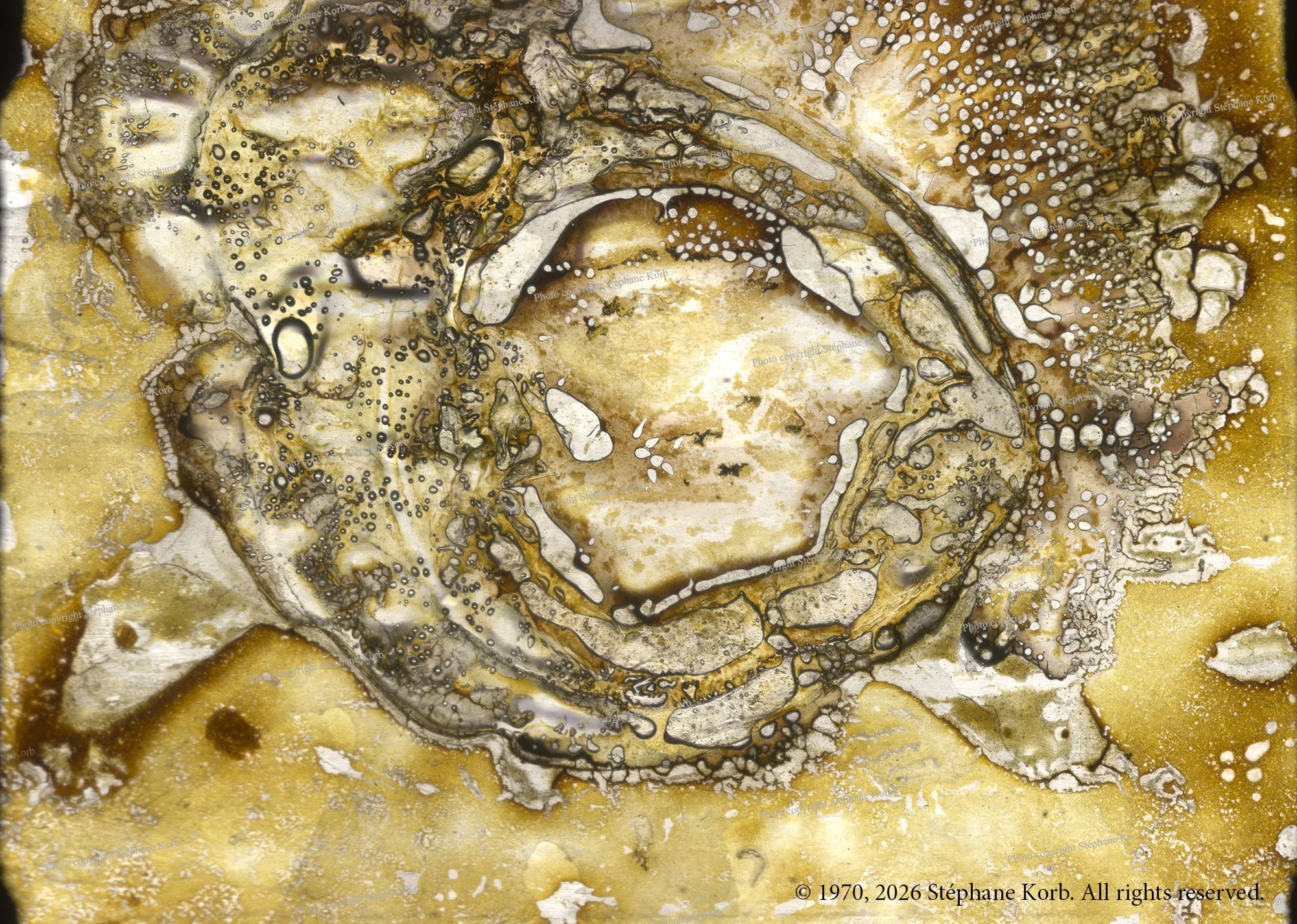
Fluidography was not merely an experimental phase: it forged my approach to making choices in photography. By teaching me the rigor of framing, the art of suspended time, and the significance of the moment, it established a protocol of seeing.
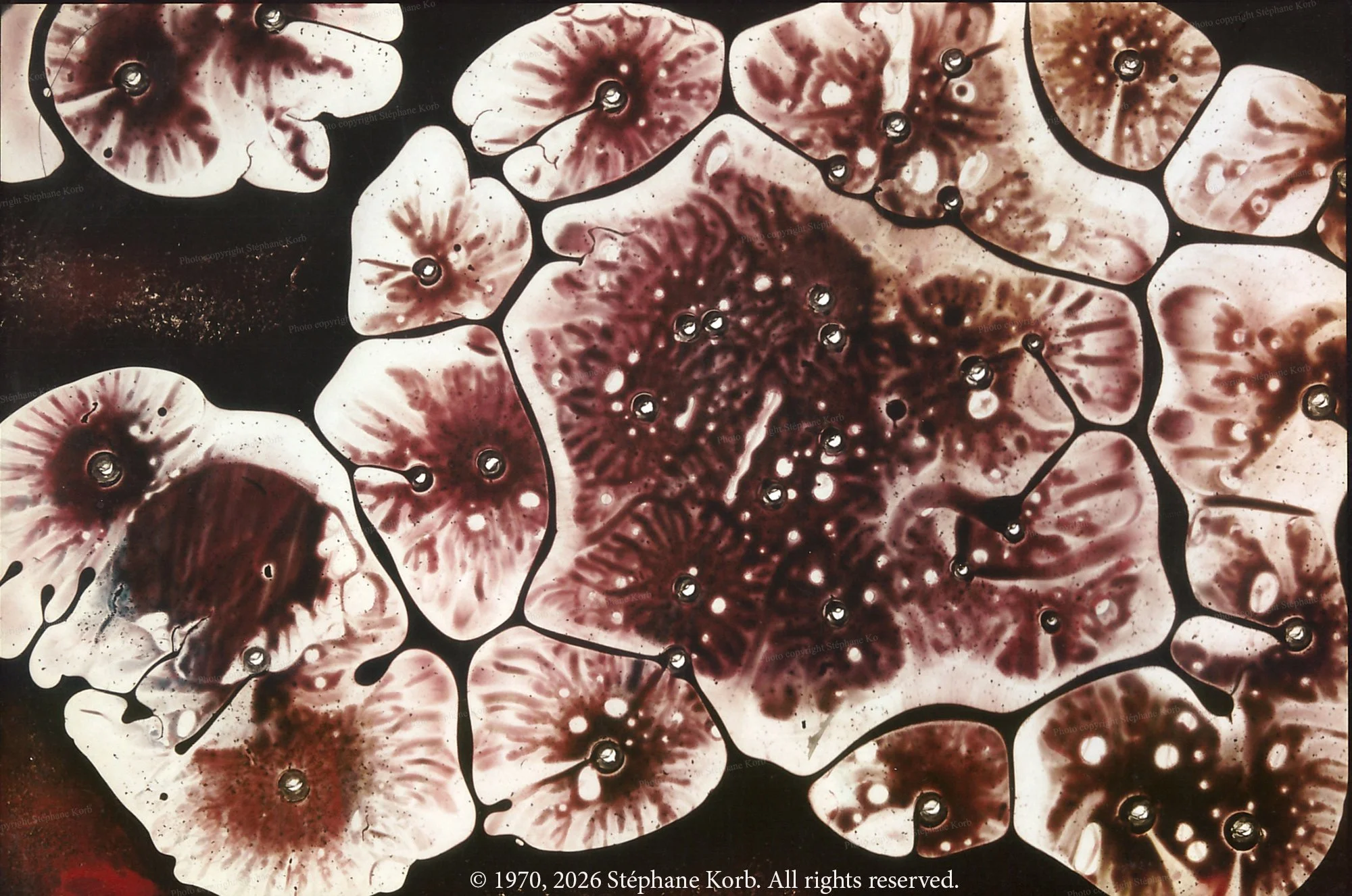
This way of allowing myself to be carried along, of observing, waiting, repeating over and over, and deciding based on my own criteria what should or should not be shown, is something I applied to nearly all of my photographic work and editorial projects.
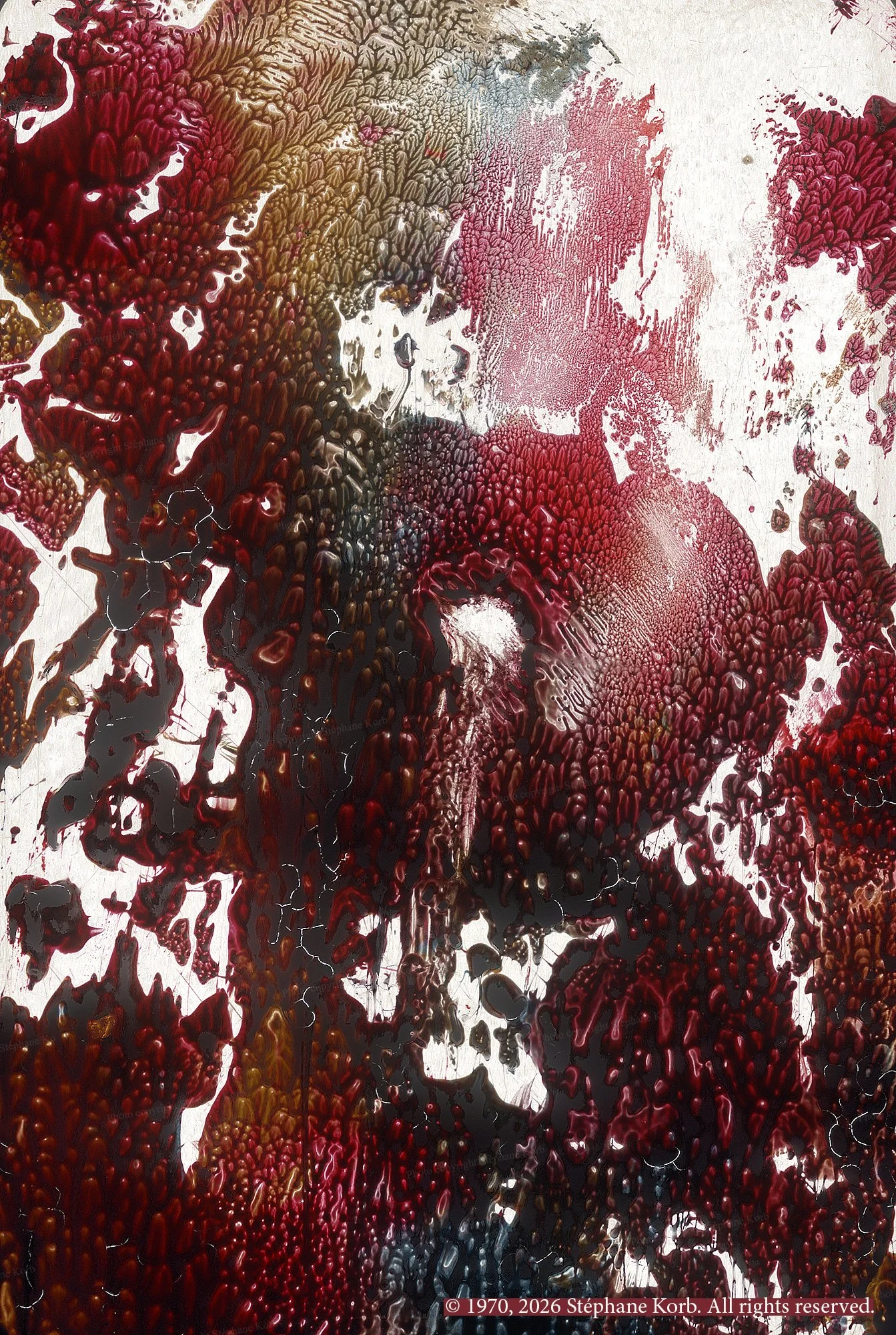
I had shown these images to Chris Marker, who shared that same fondness for looking at them while listening to music. For my part, it was Hendrix; for him, the cosmic music of Tangerine Dream. Twenty years later, in a New York café during a conversation with Olivia Gay and Woodfin Camp, Marc Riboud recalled what Chris had told him about this work.
The works presented in this article come from a series of several dozen pieces. For any inquiries, you can contact me here.
